






|
Quantity
|
Total
|
||
|
|
|||
|
|
|||
Generators
Off-grid power supply is becoming a necessity, so the decision to purchase a generator requires an understanding of the technical details—not just advertising promises. GERAK engineers analyze the main categories of equipment, taking into account prices, engine lifespan, and the specifics of selecting generators in Kyiv, Kharkiv, Dnipro, and other cities.
To make an informed choice, it’s important to keep in mind that buying a generator for a home differs from the needs of an industrial facility, and the price of a generator depends on the type of fuel and its power output. You can find a comprehensive overview on the GERAK website, which provides a detailed examination of the main types of generators, their specifications, advantages, and recommendations for selecting equipment for various needs.
Generator Classification: Selecting Equipment for Specific Tasks
The right choice starts not with the brand, but with the engine design and fuel type. A mistake at this stage will result in either consistently overpaying for fuel or being unable to power sensitive electronic equipment.
Gasoline Generators — A Classic Choice for Short-Term Backup Power
This is the most popular segment for residential use and small commercial establishments (stores, coffee shops). If you need to buy a gasoline generator, it’s important to understand both its strengths and operational limitations. Such a gasoline generator is relatively lightweight, starts easily in cold weather, and costs less than diesel counterparts.
• Advantages: low initial cost, ease of maintenance, portability.
• Considerations: A gasoline-powered generator is air-cooled and cannot operate around the clock. It requires technical breaks every 5–8 hours to cool down, and its actual operating life before a major overhaul rarely exceeds 1,500–2,000 operating hours.
When selecting a reliable gasoline generator for long-term system operation, GERAK engineers recommend strictly adhering to the maintenance schedule. If you’re planning to buy a gasoline generator, our specialists will help you calculate the exact starting power required for your facility.
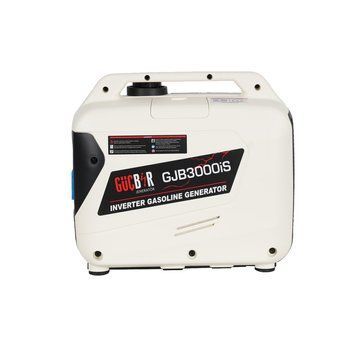
Inverter gasoline generators—ideal power for sensitive equipment
The main difference with an inverter is the presence of an electronic unit that first converts alternating current to direct current, smooths it out, and then converts it back to alternating current with a pure sine wave. Due to their complex electronics, these gasoline inverter generators are slightly more expensive than classic models, but this is fully justified by the safety of your equipment.
• Why you need them: If you need to connect a modern dual-circuit gas boiler, a server, medical equipment, or an expensive computer—a standard generator could burn out the control board due to frequency fluctuations. A specialized inverter gasoline generator for gas boilers and sensitive electronics delivers a perfect 50 Hz and 230 V.
• Fuel efficiency: Modern gasoline inverter generators are equipped with an “eco-mode.” They can reduce engine speed if the load drops (for example, if only a laptop is connected), which significantly saves fuel.
If you want to protect your expensive home appliances and electronics from damage, GERAK engineers recommend purchasing a gasoline inverter generator from trusted brands with an official warranty.
Gas-gasoline generators—maximum fuel savings
This is a modification of the classic unit, equipped with a special gas regulator right from the factory (Dual Fuel systems). These gas-gasoline generators allow you to choose the most affordable energy source at any given moment.
• Flexibility: You can connect the unit to a standard propane-butane cylinder or (most cost-effectively) connect it to a stationary natural gas (methane) mains supply. Various configurations are available to consumers, including a state-of-the-art gas-gasoline inverter generator that delivers pure, high-quality electricity.
• Cost-effectiveness: The cost per kilowatt-hour when running on natural gas is several times lower than when running on gasoline. Additionally, running on gas results in less carbon buildup in the engine, which extends the service life of the engine oil.
For household needs and to provide backup power for essential appliances, a 3 kW gas and gasoline generator or a similar 3 kW hybrid gas and gasoline generator is ideal, as their power output is sufficient for a water pump, a refrigerator, and lighting. If, however, more powerful equipment is used on-site, you should consider higher-capacity models and purchase a 5 kW gas and gasoline generator (or a standard 5 kW gas and gasoline generator). GERAK engineers will help you properly connect the gas equipment to the main line. If you decide to buy a gas- and gasoline-powered generator, our experts will ensure its safe initial startup and gearbox configuration.
Diesel Technologies: From Private Homes to Large-Scale Production
When backup power is needed for days or weeks, and the total power exceeds 10 kW, gasoline engines become uneconomical. That’s where diesel comes in.
Diesel Generators (Low and Medium Power)
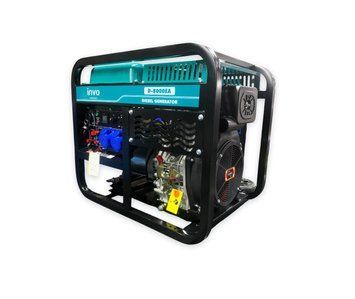
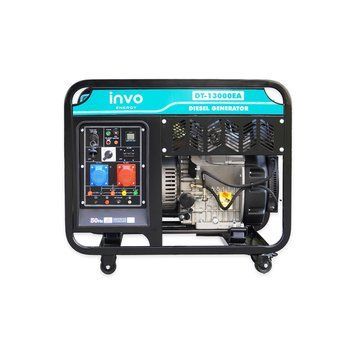
Units with a capacity of 5 to 15 kW are typically used to fully ensure energy independence for large suburban homes or offices. When it is necessary to ensure complete autonomy for a residence, the decision to purchase a diesel generator for the home becomes the most economically sound choice in the long term.
Diesel Generators (Low and Medium Power)
• Why Choose It: A modern diesel generator is much more durable than its gasoline counterparts. A stationary diesel generator has high torque, consumes less fuel per kilowatt generated, and is designed for longer continuous operation.
• Features: This equipment is heavier, noisier, and does not perform well during prolonged operation “at idle” or with a load of less than 20–30% (this leads to carbon buildup in the piston assembly).
If you’ve decided to purchase a diesel generator for backup power, it’s important to consider the requirements for its ventilation and exhaust gas removal. For the proper and safe integration of the equipment into the facility’s overall power grid, we recommend ordering the design of backup power systems from GERAK. Our engineers will accurately calculate the switching scheme and automation and help you purchase a diesel generator that meets your technical requirements at a competitive price.
Industrial diesel generators — rock-solid stability for your business
These are stationary units with capacities ranging from 20–30 kW to several megawatts. Modern industrial diesel generators are equipped with multi-cylinder engines featuring liquid (water) cooling and low RPM (1,500 rpm), allowing them to operate for weeks without interruption.
• Applications: factories, livestock complexes, large shopping centers, data centers, hospitals.
• Reliability: The service life of these giants is measured in tens of thousands of operating hours. They come in special soundproof and all-weather enclosures, are equipped with cooling jacket heating (for instant startup in winter), and feature industrial automatic transfer switch (ATS) systems.
If you’re planning to purchase an industrial diesel generator to protect your business from blackouts, it’s important to factor in the costs of delivery, installation, and commissioning. The price for each industrial diesel generator is determined on a case-by-case basis and depends on the configuration, engine brand, and the presence of additional automation systems. At GERAK, you can order a comprehensive energy audit of your facility, have a “turnkey” system designed, and purchase an industrial diesel generator at a competitive price with an official warranty. Our engineers will select reliable industrial diesel generators tailored to the specific load requirements of your production facility.